Category: Guides & Tutorials

  • Is It Safe to Reclaim SOL? Security Guide for Wallet Cleanup Tools (2026)

    Is It Safe to Reclaim SOL? Security Guide for Wallet Cleanup Tools (2026)

    You’ve heard you can reclaim SOL from empty token accounts, and now you’re staring at a tool asking you to sign a transaction. Each one is locking up ~0.002 SOL in rent. You’ve heard you can reclaim that SOL, and now you’re staring at a tool asking you to sign a transaction, and a very reasonable voice in your head is asking: is this actually safe?

    Good. That instinct is exactly what keeps your wallet intact.

    This guide will walk you through the real risks of wallet cleanup tools, give you a concrete checklist to evaluate any tool before you connect your wallet, and show you how to verify safety claims yourself — no trust required.

    Why People Worry (And Why They Should)

    Solana wallet cleanup is a legitimate on-chain operation. When you created token accounts — by receiving airdrops, swapping on a DEX, minting NFTs — the Solana runtime reserved a small amount of SOL as “rent” for each account. Closing those empty accounts returns the rent to you. It’s not a hack, not an exploit, and not too good to be true.

    But the concern isn’t about the concept. It’s about the implementation. When you connect your wallet to a cleanup tool and approve a transaction, you are authorizing on-chain instructions crafted by that tool’s program. If the program is malicious, it could drain your wallet instead of cleaning it up. If the frontend is a phishing clone, you might be signing something entirely different from what you think.

    These aren’t hypothetical fears. Scam clones targeting wallet cleanup users exist right now.

    The Real Risk: Scam Clone Epidemic

    The biggest threat in the wallet cleanup space isn’t a legitimate tool misbehaving — it’s fake versions of legitimate tools designed to steal your funds. Here’s what’s circulating:

    sol-lncinerator.org — Notice the lowercase “L” replacing the “I” in “Incinerator.” This is a classic homograph attack. The site mimics Sol Incinerator’s branding but routes transactions through a drainer contract. If you Google “Sol Incinerator” and click carelessly, this is the kind of result that can catch you.

    sol-incinerator.tax — Another clone using an unusual TLD to impersonate Sol Incinerator. Unusual domain extensions like .tax, .xyz, or .io combined with a well-known tool name are a red flag worth investigating before connecting.

    refundyoursol.io — Flagged by PCRisk in August 2025 as a crypto drainer scam site. This one is particularly dangerous because the name sounds like a legitimate recovery service. PCRisk’s analysis confirmed it was designed to trick users into signing malicious transactions that transfer assets to the attacker’s wallet.

    These clones are cheap to set up, easy to promote through paid search ads, and can disappear overnight — taking your SOL with them. The lesson here isn’t that all cleanup tools are scams. It’s that you need a reliable framework for telling the real ones from the fakes.

    The 7-Point Safety Checklist for Any Wallet Cleanup Tool

    Before you connect your wallet to any tool — Sol Incinerator, UnclaimedSOL, ClaimYourSOL, or something you just found on X — run it through these seven criteria:

    1. Are Fees Transparent Before You Sign?

    A legitimate tool tells you exactly what it charges before you approve anything. You should see the fee percentage or flat amount on their homepage. If a tool asks you to sign first and never talks about their fees, walk away.

    2. Can You Verify the On-Chain Program?

    Every Solana wallet cleanup tool executes through a program deployed on-chain. That program has a public address. Can you find it? Can you look it up on Solscan or Solana Explorer and see its transaction history? A verifiable program with hundreds of thousands of successful transactions is very different from an unverifiable black box.

    3. Are There Independent Reviews?

    Not testimonials on the tool’s own website — those are trivially faked. Look for reviews on independent platforms: Seeker dApp Store, crypto security forums, Trustpilot, Reddit threads with real discussion, or mentions by known Solana community members.

    4. Are There Known Scam Clones?

    Ironically, having scam clones is almost a signal of legitimacy — scammers clone tools that have real traffic. But it means you need to be doubly careful you’re on the actual domain. Check the URL character by character. Bookmark the real site. Don’t trust search ads.

    5. Can You Preview the Transaction?

    Modern Solana wallets like Phantom, Solflare, and Backpack show a transaction simulation before you approve. This preview should clearly show which accounts are being closed and how much SOL is being returned. If a tool’s transaction triggers warnings or shows unexpected token transfers, reject it immediately.

    6. Is the Code Open Source or Independently Audited?

    Open-source code means anyone can verify what the tool actually does. An independent security audit from a recognized firm (CertiK, Cyberscope, Halborn, OtterSec, etc.) means a professional third party has reviewed the code for vulnerabilities and malicious behavior. Either one dramatically increases trust. Both together is the gold standard.

    7. What’s the Track Record and Website Age?

    A tool that’s been operating for over a year with no security incidents is fundamentally different from one that appeared last week. Use WHOIS to check domain registration date. Look at on-chain program history on Solscan. A long, clean track record doesn’t guarantee future safety, but it’s strong evidence.

    How UnclaimedSOL Scores on the Checklist
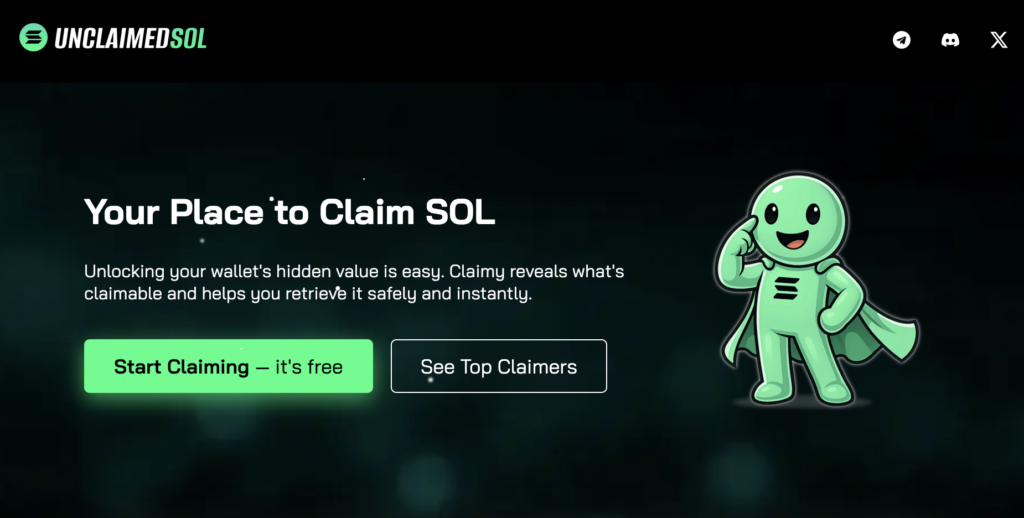
    is it safe to reclaim sol

    In the interest of transparency — UnclaimedSOL is our own tool, so take this section as a factual self-assessment, not a sales pitch. Verify every claim yourself using the methods in the next sections.

    Program address? Yes. It is UNCaXzXkR3vp8mbCJyxWUvwuRk5uHgzrwe6jcWPfiUR

    Transparent fees? Yes. Unclaimed SOL displays a 5% fee on standard rent recovery before any transaction is constructed. Fee amounts are visible in the transaction preview your wallet shows you.

    Verifiable on-chain program? Yes. The program address is public and inspectable on Solscan. It has processed hundreds of thousands of successful close-account transactions since launch.

    Independent reviews? Unclaimed SOL currently has 4.1* on Trustpilot, and 1000+ reviews on Seeker dApp Store with a rating of 4.2.

    Known scam clones? Not currently aware of active clones impersonating UnclaimedSOL specifically, though users should always verify they’re on the correct domain.

    Transaction preview? Yes. All transactions are constructed client-side and fully simulatable in Phantom, Solflare, and other standard wallets before signing.

    Audited? Yes. UnclaimedSOL is audited by Cyberscope, an independent smart contract security firm. The audit report is publicly accessible. At time of writing, it is the only tool in the Solana wallet cleanup space with a published third-party audit.

    Track record? The domain has been active for more than a year at this point, with continuous operation and no reported security incidents.

    Safety Feature Comparison Across Tools

    Safety CriteriaUnclaimed SOLSol IncineratorRefundYourSOL
    Transparent fees✅ Yes (5%)❌ No (unknown)❌ No (15% but negotiable)
    Verifiable on-chain program✅ Yes✅ Yes✅ Yes
    Independent audit published✅ Cyberscope❌ Not published❌ Not published
    Phantom directory listing✅ often #1 ranked✅ Listed✅ Listed
    Transaction preview support✅ Yes✅ Yes✅ Yes
    Known scam clones exist⚠️ Verify domain⚠️ Multiple active clones⚠️ Verify domain
    Active since202420232023
    Open sourceAudited (not OSS)Not publishedNot published

    Note: This table reflects publicly verifiable information as of February 2026. Features and security postures change — always verify current status yourself before using any tool.

    You can read see more comparisons in our Sol Incinerator vs Unclaimed SOL vs Claim Your SOL – Who Gives You the Most SOL?

    How to Verify Any Tool Before You Reclaim SOL

    Don’t trust this article. Don’t trust any article. Here’s how to verify a tool’s safety claims with your own eyes:

    Check the On-Chain Program on Solscan

    Go to solscan.io and search for the tool’s program address (every legitimate tool should publish this). Look at the transaction history: How many transactions has it processed? Over what timeframe? Are there any unusual patterns — like large SOL transfers to a single wallet? A healthy program shows thousands of small, consistent close-account transactions over months or years.

    Run a WHOIS Lookup on the Domain

    Use whois.domaintools.com or any WHOIS service to check when the domain was registered. A cleanup tool running on a domain registered last week is a major red flag. Cross-reference the registration date with when the tool claims to have launched.

    Search VirusTotal and Scam Databases

    VirusTotal actively catalogs crypto drainer scams. Search for the tool’s name and domain. If it’s been flagged, you’ll find a detailed write-up. Also search on ScamAdviser, URLVoid, and PCRisk for additional signals.

    Test With a Burner Wallet and Small Amount

    Before cleaning up a wallet with significant SOL, create a burner wallet with a few empty token accounts and a minimal SOL balance. Run the tool on this wallet first. Check Solscan to confirm the transaction did exactly what was expected — closed token accounts and returned rent, nothing more. This costs you almost nothing and tells you everything.

    Read the Transaction Before Signing

    When your wallet shows the transaction preview, actually read it. You should see closeAccount instructions targeting your empty token accounts. You should see SOL flowing to your wallet (minus the tool’s stated fee). You should not see unexpected token transfers, delegate authorities, or approvals you didn’t request.

    The Bottom Line

    Reclaiming SOL from empty token accounts is completely safe — when you use a legitimate tool and verify what you’re signing. The danger isn’t the concept; it’s the scam clones and phishing sites that prey on people who skip verification.

    Use the seven-point checklist. Verify on Solscan. Check WHOIS. Test with a burner wallet. These steps take five minutes and can save you from losing everything in your wallet to a drainer.

    The SOL locked in your empty accounts is yours. Go get it back — carefully.

  • Claim SOL With AI: MCP, OpenClaw Skills, and ChatGPT Agent Tools

    Claim SOL With AI: MCP, OpenClaw Skills, and ChatGPT Agent Tools

    Solana wallets collect leftovers over time. Not just random tokens – but SOL itself, locked as rent inside accounts your wallet created months or years ago. You might have interacted with old mints, airdrops, failed experiments, dead memecoins, or outdated apps, and ended up with accounts that can be cleaned up to reclaim SOL.

    We launched a set of agent-ready tools that make it possible to claim SOL with AI across three ecosystems:

    • ChatGPT GPT (easy, no setup)
    • OpenClaw skill (agent skill distribution via ClawHub)
    • MCP server (developer-grade integration for AI clients like Claude Desktop, Cursor, Windsurf, and more)

    Links:


    What “claim SOL” means here

    When people say “claim SOL”, they usually mean one thing. In reality, reclaimable SOL often comes from multiple account types created as side effects of normal usage.

    This project targets reclaimable SOL commonly found in:

    • Dormant token accounts (often empty accounts that still carry rent deposit)
    • Program buffer accounts (leftovers created by program deployment and related flows)

    The scanner’s job is to identify what can be reclaimed and how much is at stake – then let you choose the path to claiming depending on where you’re running the tool (ChatGPT, OpenClaw agent, or MCP client).


    Why ship in three places?

    1) ChatGPT – the simplest “scan it now” experience

    Some users just want the answer. Paste a wallet address, get:

    • total claimable SOL
    • a breakdown of where it comes from
    • next steps

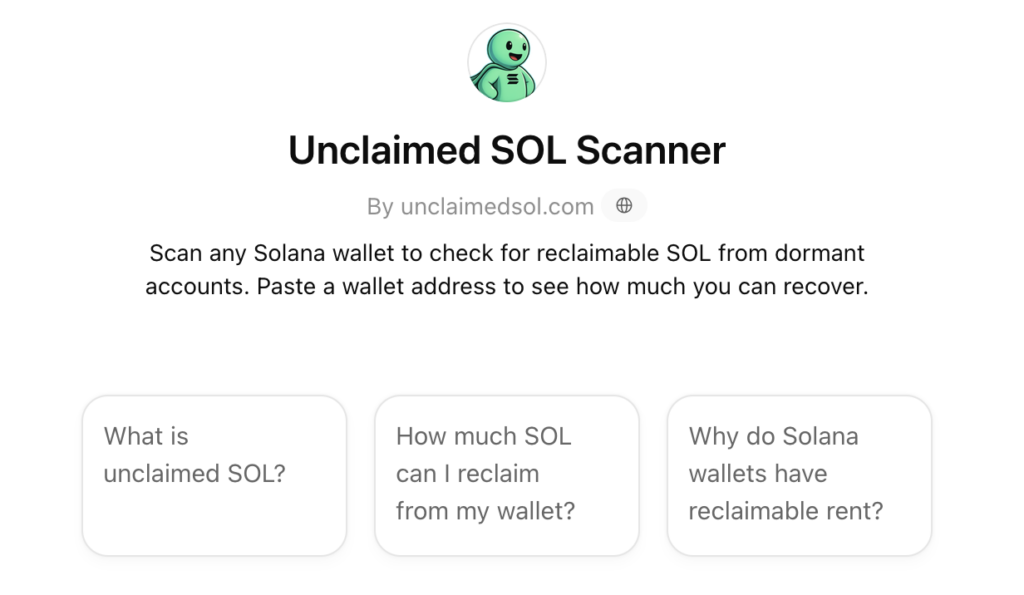
    ChatGPT is perfect for top-of-funnel discovery: quick, safe, and no terminal required. You can try it here: https://chatgpt.com/g/g-6994c9a63d388191a96b762a5a8b42ab-unclaimed-sol-scanner

    2) OpenClaw – “skills” that agents can use

    OpenClaw is built around reusable skills that agents can call consistently. Our OpenClaw skill is designed to be:

    • read-only by default
    • no private keys
    • no signing
    • scan and report, then route users to claim through the standard flow

    That separation is intentional. It keeps agent usage safe while still delivering value immediately.

    3) MCP – the serious “claim SOL with AI” bridge

    claim sol with ai

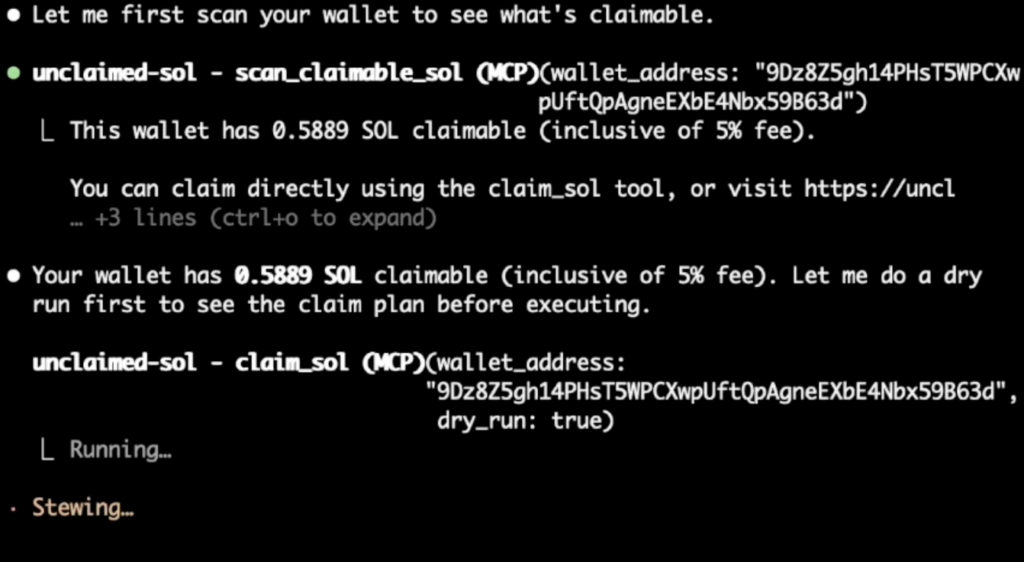
    MCP (Model Context Protocol) is where tool-using assistants get real. With MCP you can plug a capability into an AI client and let the agent call it like a function – locally, with your own rules.

    Our MCP server supports two modes:

    • scan-only (safe default)
    • opt-in claiming (local signing, guardrails, deliberate execution)

    If you want an AI agent to help you actually claim, MCP is the best home for that.


    How claiming works (scan-only vs opt-in claiming)

    Mode A: Scan-only (recommended default)

    This is the safest way to use an AI agent:

    • No keys
    • No transactions
    • No irreversible actions

    You ask the agent to scan a wallet, and it returns what it finds. This is ideal for:

    • content creators
    • support teams
    • analysts
    • “check my wallet first” users

    Mode B: Opt-in claiming (power users)

    If you want to truly claim SOL with AI, you need a controlled environment where signing is local and actions are intentional.

    That’s what MCP enables.

    In claim mode, the MCP tool flow is built to prevent accidental execution:

    • You run a dry run first
    • It returns a short-lived execution token
    • You must explicitly execute with that token

    This pattern forces a deliberate “yes, do it” step, rather than letting an agent fire a transaction on a whim.

    Important note:

    • Closing accounts is irreversible. Use scan-only unless you fully understand the flow.

    What makes this “agent-safe” by design

    AI agents are powerful, but wallet actions should never be casual. So the architecture follows a simple rule:

    • AI is great at discovery, summarizing, explaining, and planning
    • Claiming should be opt-in, locally signed, and protected by guardrails

    That’s why:

    • ChatGPT and OpenClaw are positioned primarily for scanning + guidance
    • MCP is where claiming lives, because you can enforce local signing and safety checks

    This approach lets you benefit from agents without turning “paste wallet” into “oops, I signed something”.


    Who this is for

    If you’re a normal user

    Use the ChatGPT GPT to:

    • estimate claimable SOL
    • understand where it comes from
    • decide if it’s worth doing

    Then claim through your preferred flow.

    If you build agents or workflows

    Use OpenClaw if you want:

    • standardized skill calling
    • safe scanning inside agent systems
    • distribution via ClawHub

    If you’re a dev who wants automation

    Use MCP if you want:

    • a real tool interface for assistants
    • scan-only automation in IDEs
    • opt-in claiming with local signing and strict execution control

    If you actually prefer user interfaces, then you should read our post on claiming using our website.


    Example prompts you can use (copy-paste)

    ChatGPT (scan-first)

    • “Scan this Solana wallet and estimate how much SOL I can reclaim: <WALLET>”
    • “Explain where reclaimable SOL usually comes from and what I should do next”
    • “Give me a breakdown and the safest way to proceed”

    MCP / agent client

    • “Scan wallet <WALLET> for claimable SOL and summarize findings”
    • “Do a dry run claim plan and show what would be closed”
    • “Only if everything matches expectations, execute the claim”

    FAQ

    Is this really “claim SOL with AI” or just scanning?

    Both. Scanning is always safe and available everywhere. Actual claiming is opt-in and best suited to MCP because it supports local signing and deliberate execution steps.

    Why not let ChatGPT claim directly?

    Because safe claiming requires local signing, environment control, and guardrails. Chat experiences are best for scanning, explanation, and routing users to the right place.

    What do I need to use MCP?

    You install the MCP package and add it to an MCP-compatible client configuration, then your agent can call the scan tool (and optionally claim mode if you enable it). Package is here: https://www.npmjs.com/package/@unclaimed-sol/mcp


    Launch Links (again):


    Closing CTA

    If you want the fastest result:

    • Use the ChatGPT GPT to scan a wallet in seconds

    If you want agent distribution:

    • Use the OpenClaw skill and keep it scan-only by default

    If you want to truly claim SOL with AI:

    • Use MCP, keep signing local, run dry runs first, and only execute when you’ve reviewed the plan
  • Close Solana Buffer Accounts and Reclaim SOL Left Behind by Failed Deploys

    Close Solana Buffer Accounts and Reclaim SOL Left Behind by Failed Deploys

    If you’re trying to close Solana buffer accounts to reclaim SOL, you’re not alone – and you’re not imagining it. Failed program deploys and upgrades can leave SOL behind in program-related leftovers that many wallets never surface clearly.

    In this guide, you’ll learn:

    • What buffer-related leftovers are (in plain English)
    • Why failed deploys/upgrades can leave SOL behind
    • How to detect it safely
    • How to reclaim lamports from buffer accounts without turning it into a multi-hour CLI rabbit hole

    Quick take

    • When a program deploy or upgrade fails, SOL that funded the process may remain sitting in program-related leftovers.
    • Those leftovers can usually be recovered by the authority that created them.
    • This is especially relevant if you deployed/upgraded programs in 2022-ish (or any time you were pushing changes under pressure).

    What are Solana buffer accounts (and why do they exist)?

    During program deploys and upgrades, Solana uses temporary staging mechanisms so program data can be uploaded safely. In normal conditions, everything completes and there’s nothing left to clean up.

    But when deploys fail, upgrades are abandoned, or workflows get interrupted, the “temporary” part can stop being temporary.

    Result:

    • SOL gets left behind in program-related leftovers
    • Devs forget about it
    • The wallet UI often doesn’t present it as “claimable” SOL

    This is why searches like close buffer accounts Solana and reclaim lamports from buffer accounts have become common in builder communities.


    Why failed deploys/upgrades leave SOL behind

    A failed deploy or upgrade can happen for many reasons:

    • network congestion
    • fee spikes at the wrong time
    • tooling interruptions
    • workflow mistakes under pressure
    • aborted upgrade attempts

    The common outcome:

    • you paid SOL to fund deploy/upgrade steps
    • the process didn’t fully complete
    • some SOL remains parked in leftovers tied to that deploy/upgrade path

    If you remember the “deploy-fail era” vibes from 2022, you already know how easy it was to end up with these.


    Who should check this?

    You should strongly consider checking if:

    • you deployed or upgraded Solana programs (especially upgradeable programs)
    • you used automation (Anchor scripts, CI, repeated deploy attempts)
    • you had failed deploys and moved on quickly
    • you’ve ever said “I think I lost SOL during deploy” and never fully investigated

    Most wallets won’t have this.
    But for the wallets that do, the amounts can be meaningful.


    The hard part for most people is not “recovering” – it’s finding the leftovers reliably and knowing what is safe to clean up.

    There are two broad approaches:

    1) CLI/manual approach (for devs)

    Yes – experienced devs can recover this manually using Solana CLI workflows.

    The tradeoff:

    • it’s cool/techy
    • but it can be time-consuming
    • and it’s easy to miss something or waste time enumerating accounts
    • danger of compromising private key or messing something up if CLI not user correctn;y

    If you’re comfortable living in CLI, that can be a good route.

    2) Guided detection + reclaim flow (fast path)

    The faster path is a guided scan that:

    • detects program-related leftovers automatically
    • shows an estimate before you approve anything
    • prepares the recovery actions with normal wallet approvals

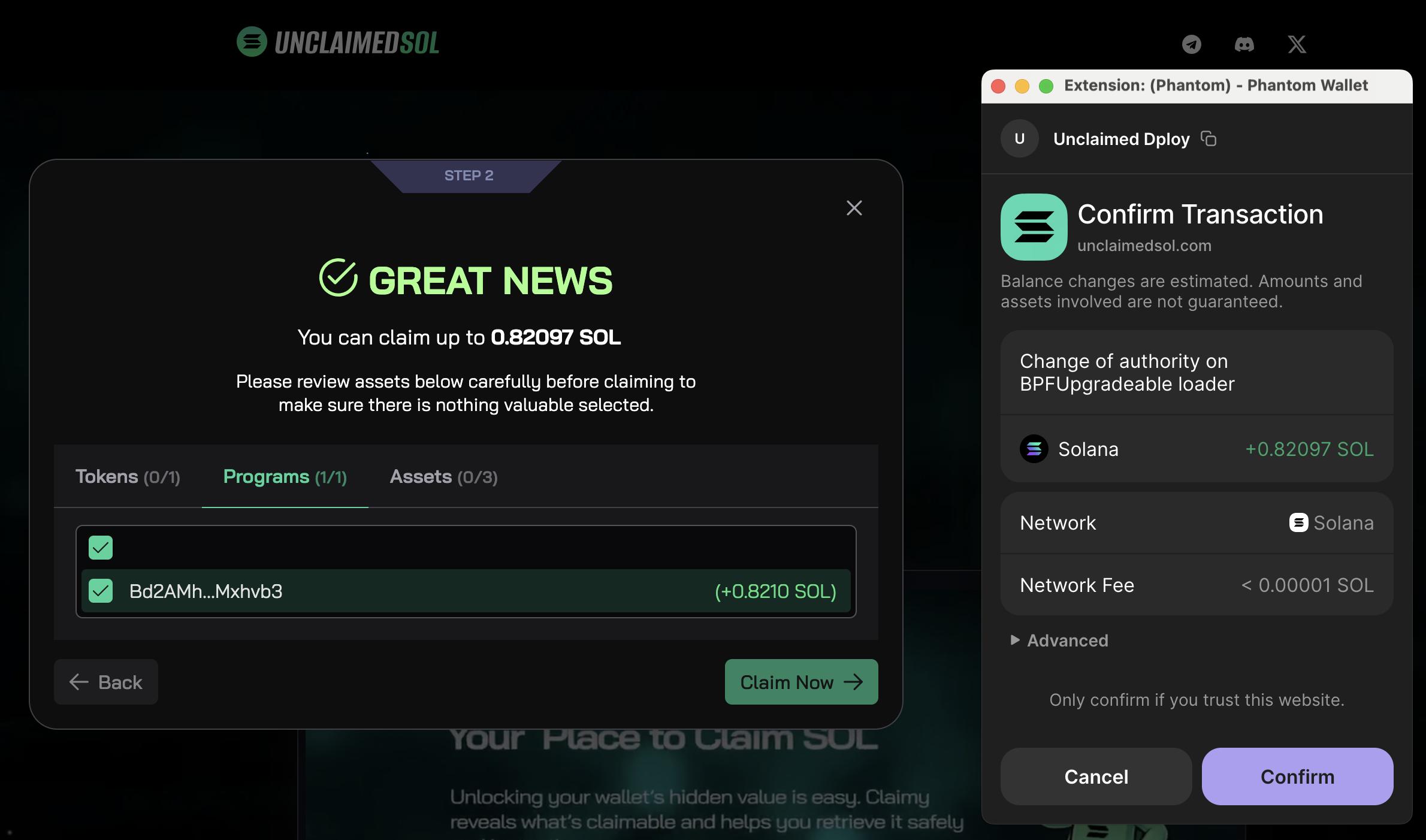
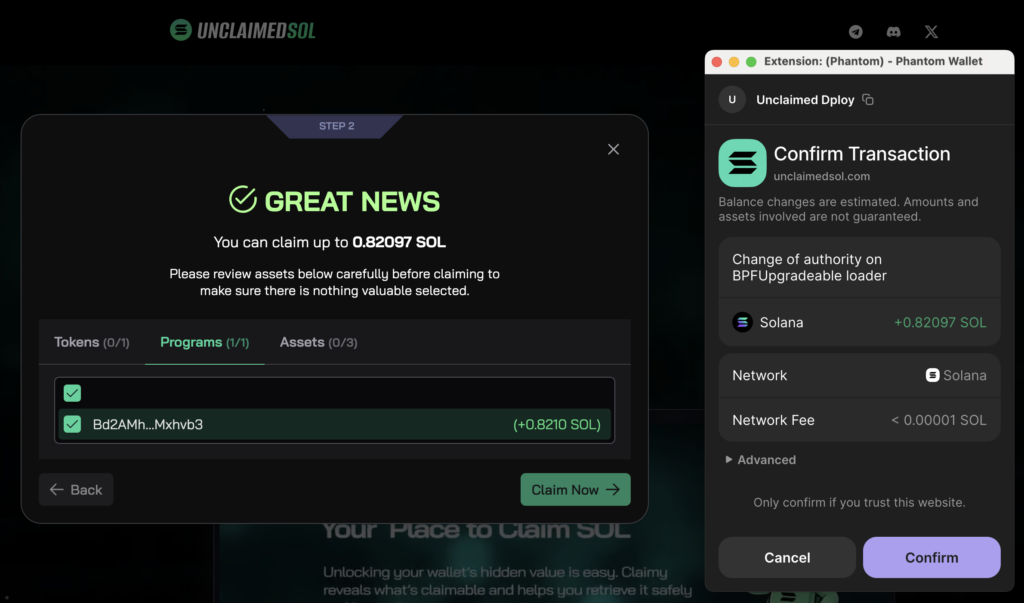
    This is exactly why we added a Programs tab inside the Unclaimed SOL claim flow.


    The Programs tab in Unclaimed SOL

    close solana buffer accounts

    We built Programs as an extension of the existing claim flow because this is the same core promise:

    • detect SOL that’s genuinely reclaimable
    • keep approvals explicit and wallet-native
    • show the total claimable amount up front
    • make the process fast, clear, and repeatable

    What you’ll see

    • a Programs section alongside your normal token-account reclaim results
    • a clear total claimable number
    • a breakdown so you understand where the SOL is coming from

    Safety model

    • you approve transactions in your favorite wallet like normal
    • you can verify amounts before signing
    • nothing happens without your explicit wallet approval

    Fees and transparency

    For Programs recovery we use:

    • 10% fee, calculated in the claimable amount

    That matters because this category is often “invisible” until detected, and users should never feel surprised by what they’re paying.


    Common confusion: “Close program” vs “close buffer accounts”

    These searches often get mixed together:

    • solana close program
    • solana close account
    • close Solana buffer accounts

    They are not the same thing.

    • Closing a program is irreversible and has consequences (you can’t reuse the program id).
    • Closing buffer-related leftovers is typically about reclaiming SOL that was funding staging/deploy attempts.

    If you’re here because you suspect “SOL was left behind”, you’re usually dealing with the second category.


    Before you approve anything:

    • confirm the expected net amount
    • confirm the recipient wallet address
    • avoid rushing if the numbers look off
    • if you’re using a fresh wallet setup, double-check you’re connected to the correct one

    Simple habit: treat this like moving funds – verify the details first, then sign.


    FAQ

    What does “close Solana buffer accounts” mean?

    It usually refers to cleaning up deploy/upgrade leftovers so the SOL (lamports) sitting in them can be returned to a normal wallet address.

    Can I reclaim lamports from buffer accounts?

    Yes, in many cases the lamports can be reclaimed by the authority that created or controls the leftover deploy/upgrade path.

    Do all wallets have this?

    No. Most wallets won’t. It’s most relevant for builders who deployed/upgraded programs and had failed attempts.

    Is this the same as closing empty token accounts?

    No. Empty token accounts are a separate category (classic rent reclaim). Program deploy/upgrade leftovers are different and typically require different detection logic.

    Can I do this with CLI?

    Yes. Devs can recover this via CLI. The tradeoff is time and complexity. The Programs tab is the guided, faster path.


    How to reclaim your SOL

    If you deployed/upgraded programs and had failed attempts, it’s worth checking once:

    • run a scan
    • open the Programs tab
    • review the amounts
    • approve in-wallet if it looks correct

    👉 Go to https://unclaimedsol.com/ and try the Programs now!

  • How to Add Unclaimed SOL to Your Home Screen on Mobile

    How to Add Unclaimed SOL to Your Home Screen on Mobile

    If you use Solana often, you know how valuable every bit of $SOL is — from unclaimed airdrops to forgotten tokens sitting in old wallets. With Unclaimed SOL, you can easily recover unclaimed balances, close token accounts, and clean up your Solana wallet — all in one simple tool.

    And now, you can make Unclaimed SOL feel like a mobile Solana app by adding it directly to your home screen. No App Store, no downloads — just pure Web3 convenience.

    Whether you’re claiming lost SOL tokens, purging junk NFTs, or managing your DeFi leftovers, this quick setup gives you instant access to your Solana cleanup dashboard anywhere, anytime.

    You will not have to use the browser or wallet to search for the app, just tap an icon on your home screen and you are in the world of free SOL.

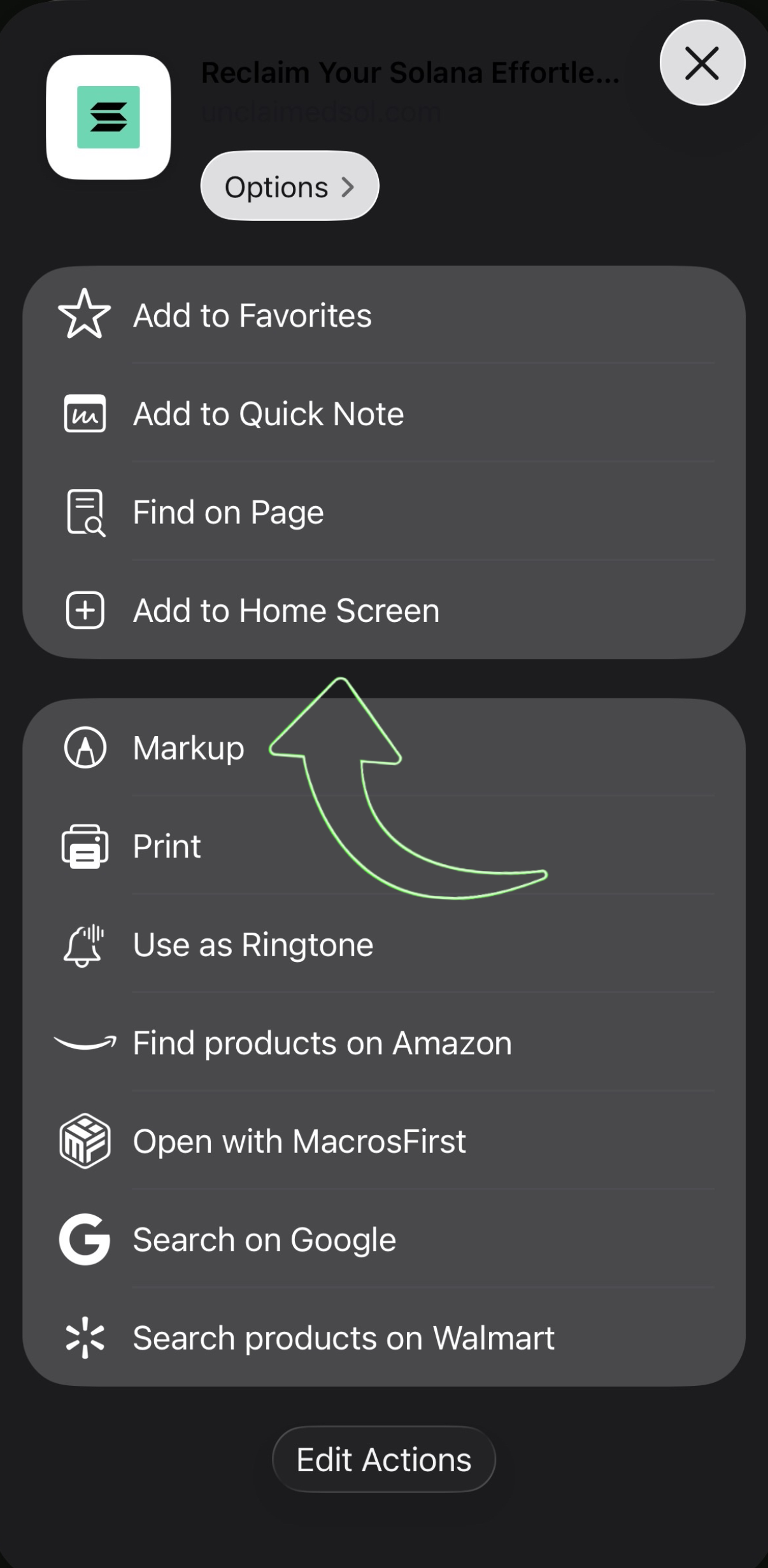
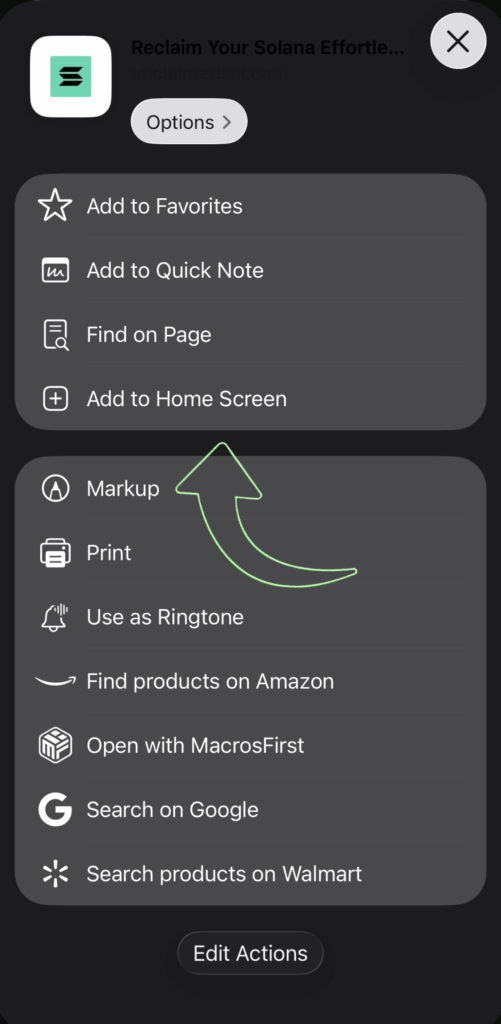
    Here’s how you can do it (with pictures):👇

    For iPhone (Safari)

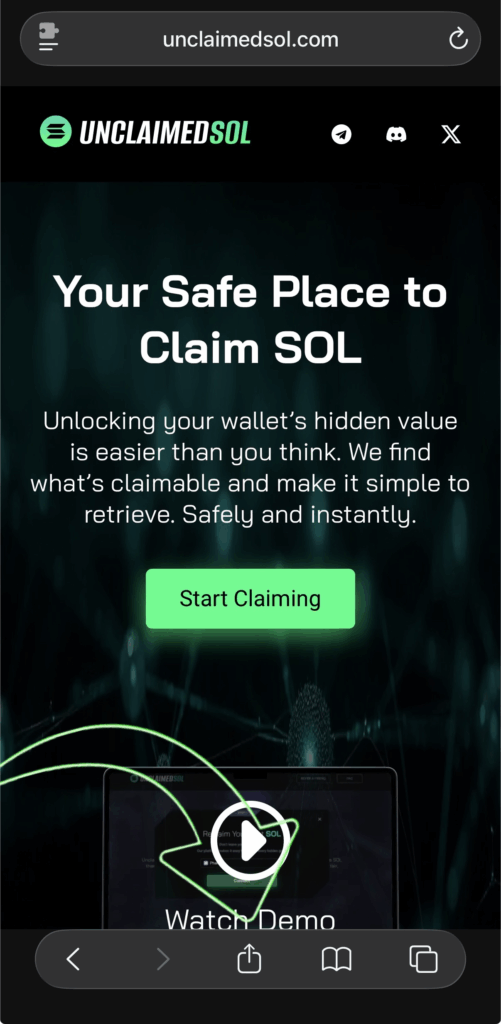
    1. Open Safari on your iPhone.
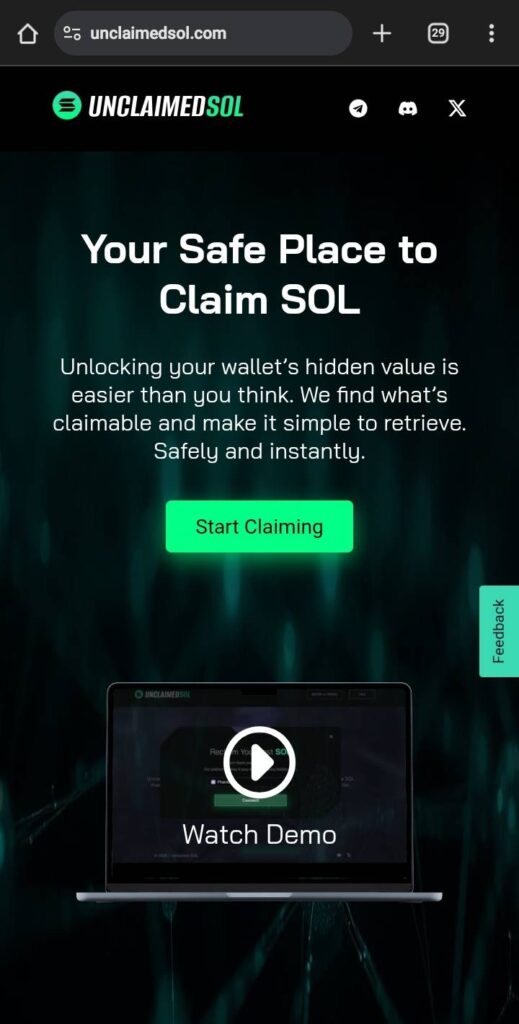
    2. Go to unclaimedsol.com.
    3. Tap the Share icon (the square with an arrow at the bottom or top of the screen).
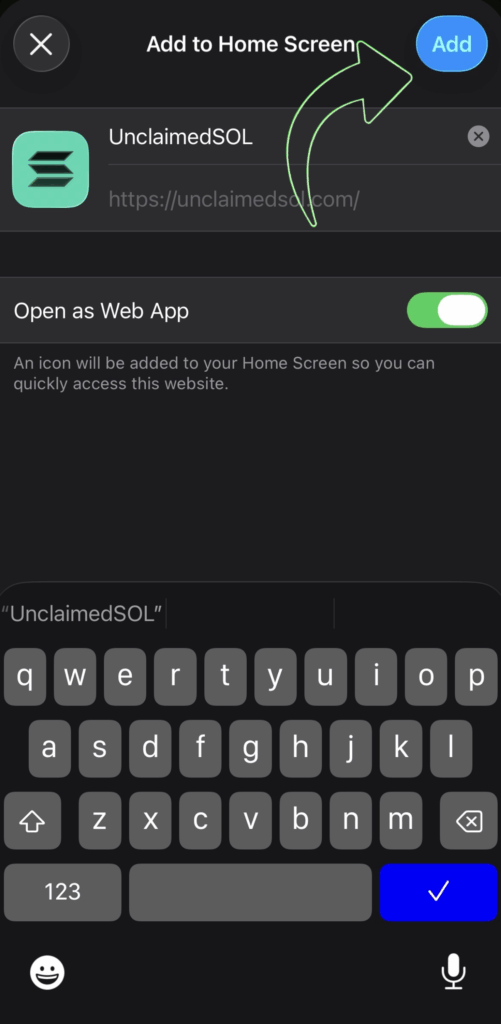
    4. Scroll down and tap “Add to Home Screen.”
    5. Tap Add in the top-right corner.

    That’s it! You’ll now see the Unclaimed SOL icon on your home screen just like any app. Tap it to launch instantly.

    For Android (Chrome)

    1. Open Chrome on your Android device.
    2. Visit unclaimedsol.com.
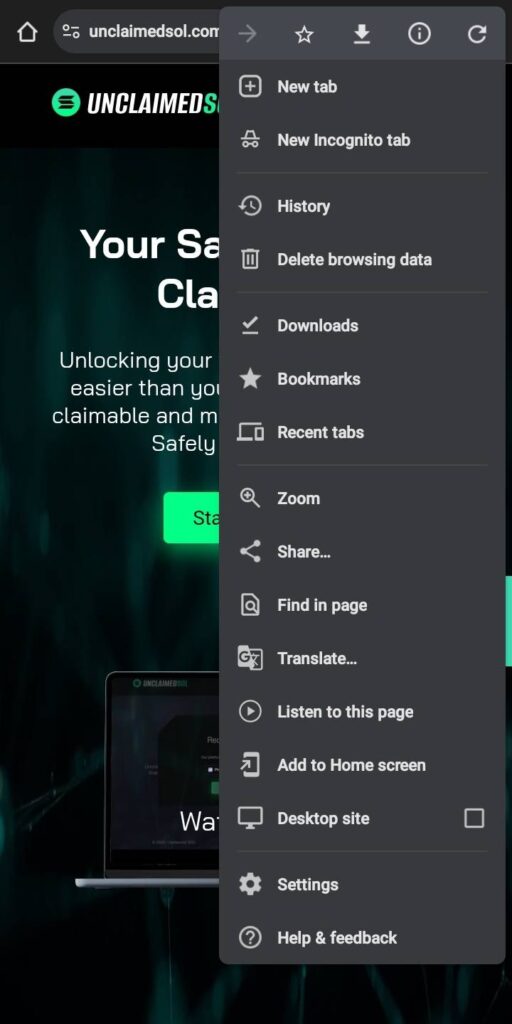
    3. Tap the three-dot menu (⋮) in the top-right corner.
    4. Select “Add to Home screen.”
    5. Choose a name (like Unclaimed SOL) and tap Add.

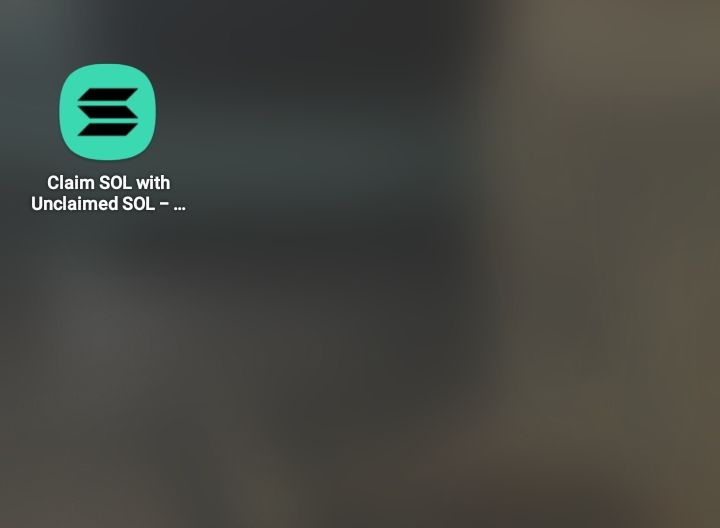
    Done! You’ll now have a shortcut that opens Unclaimed SOL in full-screen mode — just like a native app.


    💡Pro Tip:

    When added to your home screen, Unclaimed SOL acts as a Progressive Web App (PWA) — meaning it loads faster, easier to connect, and gives you a smoother experience every time you open it.

    🌐 Why You’ll Love It

    • Instant access — no typing URLs or bookmarking
    • 🔐 Secure — powered directly by your favorite browser
    • 💰 Claim faster — find, recover, and purge your SOL on the go

    Start claiming your lost SOL the smart way — add Unclaimed SOL to your home screen today and turn it into your personal Solana cleanup app. 💚

    Do you know that we recovered almost $60k last week? Check it out: Weekly Report: Over 320 SOL Claimed This Week

  • Close and Burn Solana Tokens: 5 Easy Steps Using web3.js

    Close and Burn Solana Tokens: 5 Easy Steps Using web3.js


    Introduction

    If you’ve been using Solana for trading, minting, or testing projects, your wallet has likely turned into a jungle of token accounts.
    Every airdrop, mint, or failed project leaves behind extra SPL token accounts — most of them empty, all of them costing rent.

    burn solana tokens

    Manually closing and burning tokens one by one takes forever, and writing the same script from scratch each time is just wasted effort.
    Fortunately, there’s a clean and secure way to burn Solana tokens in bulk while reclaiming rent automatically — using an open-source SDK from Unclaimed SOL.

    ⚙️ What Does It Mean to Burn Solana Tokens?

    On Solana, every SPL token you hold lives inside a small account called an ATA (Associated Token Account).
    Each account costs a bit of SOL to stay active.
    When a token becomes useless — maybe from an airdrop or an abandoned project — you can burn it, which means permanently removing those tokens from circulation.

    Once burned, you can close the token account, releasing the rent deposit (in SOL) back to your main wallet.
    It’s a double win: fewer tokens cluttering your wallet, and more SOL returned to you.


    ⚡ Integrate It into Your App or Trading Bot

    If you’re building a trading bot, analytics dashboard, or Solana wallet manager for users, you can easily integrate this SDK directly into your backend or UI.
    By adding a simple “Claim SOL” or “Burn Tokens” button, users can clean their wallets and reclaim rent automatically — all through your app, using their connected wallet.

    This makes your product more complete while helping users keep their balances optimized.


    🧠 Why You Should Burn Tokens Regularly

    Here’s why cleaning up your wallet and burning unused tokens actually matters:

    • 💰 Recover rent deposits: Every closed account gives you back a small amount of SOL.
    • 🧹 Stay organized: You avoid hundreds of “ghost” token accounts that confuse explorers and bots.
    • 🔒 Improve wallet safety: Fewer accounts = fewer possible errors or scam tokens.
    • Speed up tools and bots: Cleaner wallets mean faster balance checks and smoother performance.

    If you’ve ever traded meme coins or tested multiple DeFi protocols, burning Solana tokens can easily recover a few SOL and make your wallet feel brand new again.


    🧩 The Best Way to Burn Solana Tokens in Bulk

    There’s now a simple open-source SDK that automates this process:

    👉 @unclaimedsol/spl-burn-close-sdk

    This package lets developers and power users batch burn tokens and close accounts in one go — all while keeping full control of their wallet and private keys.

    The SDK doesn’t submit or sign transactions for you; it just builds them. You decide what to burn, when to send, and which connection or wallet to use.


    🧰 Quick Setup (web3.js Example)

    1️⃣ Install the SDK

    npm install @unclaimedsol/spl-burn-close-sdk

    Make sure @solana/web3.js is already installed.

    2️⃣ Import the functions

    import { buildBurnAndCloseTransactions, PROGRAM_ID } from "@unclaimedsol/spl-burn-close-sdk";

    3️⃣ Prepare your environment

    You’ll need:

    • A Connection (to Mainnet)
    • Your Keypair or PublicKey
    • A list of token mints and corresponding ATA addresses you wish to burn and close

    4️⃣ Build transactions

    const txList = await buildBurnAndCloseTransactions(connection, ownerKeypair, mintAccounts);

    Each transaction is built according to Solana’s limits — the SDK automatically splits them into multiple batches if necessary.

    5️⃣ Sign and send

    Loop through each transaction, sign it using your wallet, and send via RPC.
    Once processed, you’ll see the SOL rent returned to your balance.


    🚀 What Happens Behind the Scenes

    • 🔥 Burns non-zero token balances
    • 🧹 Closes empty ATAs and sends rent back to your wallet
    • 💸 Sends a small 5% dev fee to Unclaimed SOL (for maintaining the SDK)
    • ⚡ Batches transactions automatically for speed and simplicity

    This SDK works perfectly for:

    • 🖥️ Backend scripts and bots
    • 🌐 Frontend dApps with Wallet Adapter
    • 🤖 Automation tools and dashboards

    🧾 Demo Repository

    You can find a working example here:
    👉 close-burn-token-account-solana


    You can view the transactions on Solscan — just switch to Legacy Mode to see every burn and close instruction clearly.

    The output often shows two or more transactions depending on how many tokens your wallet had.


    🔒 Safety Tips

    • Always be careful when burning tokens on Mainnet.
    • The SDK never sends or signs for you — you’re in full control.
    • Avoid any scripts that ask for your seed phrase or private key.
    • Use a hot wallet with no valuable assets for testing.
    • Read the SDK’s open-source code — it’s short, transparent, and easy to audit.

    💬 Why This Tool Saves Time

    If you’ve built bots or scripts for Solana, you’ve probably written token-cleaning logic more times than you’d like to admit.
    This SDK eliminates that repetition. With one clean function call, you can burn Solana tokens and close dozens of accounts in under a minute — no messy boilerplate, no trial-and-error loops.

    For developers maintaining multiple wallets or automation pipelines, this tool can literally save hours per week.


    🏁 Conclusion

    Cleaning up your wallet isn’t just about organization — it’s about efficiency and reclaiming lost value.
    With @unclaimedsol/spl-burn-close-sdk, you can easily burn Solana tokens, close their accounts, and get back your SOL rent — all while staying fully in control.

    If your wallet’s full of junk tokens from old airdrops or test mints, take five minutes to clean it up.
    A lighter wallet is a safer wallet — and sometimes, it even puts a little SOL back in your pocket.

  • How to Claim SOL – 5-Step Powerful Guide for Solana Users

    How to Claim SOL – 5-Step Powerful Guide for Solana Users

    Introduction

    If you’ve used Solana for a while — traded, minted NFTs, or tried DeFi — chances are you’ve left behind some SOL you didn’t even know about.
    Small fractions of SOL can remain locked in inactive wallets, old token accounts, or abandoned program deposits. These balances belong to you, but you must claim SOL to get them back.

    Claim SOL

    The good news? You don’t need to be a developer or blockchain expert to do it.
    In this guide, you’ll learn what “claiming SOL” really means, how to do it safely, and how to make sure you never lose track of your tokens again. If you’re not sure what ‘claiming SOL’ actually means or why it happens, this is all explained step by step in our claim SOL guide.


    1. What Does It Mean to Claim SOL?

    Every time you interact with a smart contract or hold a token on Solana, your wallet creates a small “token account.”
    Each of these accounts must hold a tiny amount of SOL as rent to stay active. When you no longer use those tokens — or when a DeFi program shuts down — those rent deposits remain stuck.

    When you claim SOL, you’re basically closing those unused accounts and moving their balances back into your wallet. It’s like collecting change left behind in forgotten pockets — small pieces that, when added together, can be surprisingly valuable.


    2. Why It’s Important to Claim SOL

    There are three key reasons to make claiming SOL part of your crypto routine:

    • 💰 You recover real value. Even 0.1 or 0.2 SOL adds up, especially when the price rises.
    • 🧹 You keep your wallet clean. Too many open token accounts can clutter your wallet and slow performance.
    • 🔒 You protect your funds. Fewer inactive accounts mean fewer potential points of exposure.

    Many early Solana users have found between 0.5 and 3 SOL sitting in old wallets — completely forgotten until they ran a claim scan.


    3. The Safest Way to Claim SOL

    The easiest and safest method is through Unclaimed SOL— a free tool built specifically for this purpose.
    It automates the technical parts, keeping everything fully on-chain and transparent.

    Here’s how to claim SOL safely:

    1. Go to unclaimedsol.com (if you are using mobile app wallets, enter the address in those apps, for example Phantom or Solflare).
    2. Connect your wallet — no private keys or logins required.
    3. The system scans the Solana blockchain for inactive token accounts, rent deposits, and recoverable balances.
    4. Within seconds, it lists the accounts you can claim.
    5. Click Claim and confirm the transaction in your wallet (Phantom, Solflare, or Ledger).

    That’s it — your claimed SOL will appear in your wallet instantly, and every step can be verified directly on Solscan.


    4. How to Verify the Claim

    Transparency is what makes this process safe. Once your claim is complete, you can look for the transaction on Solscan or Solana Explorer to can confirm exactly what happened:

    • Which token accounts were closed
    • How much SOL was returned
    • The final amount sent to your wallet

    Everything is recorded directly on the blockchain. No one ever touches your funds but you.

    This kind of verification is essential because it protects users from scams — especially fake “claim” sites or Telegram bots that promise to recover tokens but actually steal wallets.


    5. Common Mistakes When Claiming SOL

    Even though it’s simple, many users still make common errors that cost them money. Avoid these:

    • ❌ Entering private keys anywhere — you never need to do that to claim SOL.
    • ⚠️ Clicking fake links that imitate the Unclaimed SOL site.
    • 🚫 Using “claim bots” or scripts from Telegram or Discord.
    • ❗ Forgetting to double-check your wallet before confirming transactions.

    If a site asks for a seed phrase or private key, close it immediately. The legitimate process never needs it.


    6. How Often Should You Claim SOL?

    Claiming SOL isn’t a one-time action. As you interact with new projects, new rent accounts appear.
    A good practice is to:

    • Run a claim scan every few days.
    • Especially before migrating to a new wallet.
    • And after any big trading, DeFi, NFT, or airdrop activity.

    You’ll be surprised how often small amounts build up again over time.


    7. Claim SOL – Simple Action, Big Impact

    When you claim SOL, you’re not just recovering your tokens — you’re helping clean up the Solana network.
    Each closed account reduces blockchain bloat and helps keep transaction speeds high.

    It’s a small but powerful action that keeps the ecosystem healthy while putting your SOL back where it belongs: in your wallet.

    Thousands of Solana users have already used Unclaimed SOL to recover funds they didn’t even know they had. It’s quick, free, and fully transparent — exactly how crypto should be.


    Conclusion

    If you’ve never checked your wallets, now’s the time to do it.
    Visit unclaimedsol.com, connect your wallet, and run a scan. You could be sitting on more SOL than you realize.

    Don’t let your value stay trapped in forgotten accounts — claim SOL today and take back what’s already yours.

  • How to Recover Lost SOL Tokens – Full Guide 2025

    How to Recover Lost SOL Tokens – Full Guide 2025

    Introduction

    If you’ve been active in the Solana ecosystem for a while, chances are you’ve left some tokens behind and could recover lost SOL— maybe a few airdrops, small balances, or rent fees locked in closed accounts. Many Solana users are surprised to learn they have unclaimed SOL sitting unused for months or even years.

    Recover Lost SOL

    This guide explains how you can recover those funds safely using Unclaimed SOL, a free tool built to help you reclaim what’s already yours.


    1. Why SOL Gets Lost

    SOL doesn’t vanish, but it often gets “stuck” in places you forget about.
    Here are the most common reasons:

    • You removed a token from your wallet, but the token account wasn’t closed.
    • You received small airdrops and never noticed them.
    • You used multiple wallets (Phantom, Solflare, Ledger) and lost track of which one holds what.
    • You participated in old DeFi or IDO projects that locked rent deposits.

    All these small fragments of SOL can add up. In some cases, users recover 0.01 or even 2 SOL just by checking old wallets.


    2. Scanning Your Wallets

    To start, make sure you have some accounts already added to your favourite wallet such as Phantom, Solflare or Coinbase.

    Then open unclaimedsol.com and connect your wallet. The system will automatically check:

    • Inactive or closed token accounts.
    • Rent-exempt balances.
    • Old program accounts with locked lamports.
    • And much more

    Within seconds, you’ll see a total amount of SOL that is yours and which you can claim.


    3. Claiming Your SOL Safely

    If unclaimed balances are found, the site will show a “Claim” button. Clicking it and approving the transaction(s) begins a secure process that transfers the recoverable SOL back to your active wallet.

    ✅ You never enter your private key.
    ✅ No third-party access to your funds.
    ✅ All transactions happen directly on-chain through your wallet (Phantom, Solflare, Ledger).

    The tool simply builds and sends the transaction for you to recover lost SOL — everything else is handled by Solana’s network.


    4. Keeping Track of What You Recovered

    After claiming, you can view a transaction summary and export a record for your personal bookkeeping on your favourite Solana explorer. This is useful if you plan to report your crypto holdings or track them for taxes.

    Most importantly, you’ll see exactly where each claim came from — old DeFi protocols, NFT mints, or token rent accounts.


    5. Avoiding Future Losses

    If you were able to recover lost SOL, take a few minutes to prevent it from happening again:

    • Keep one primary wallet for all Solana activity.
    • Periodically check your wallets using Unclaimed SOL (especially before migrating to a new wallet).
    • Bookmark trusted tools like Solscan and Solana Explorer to verify addresses.

    Even small rent deposits are worth claiming — they belong to you.


    6. Transparency

    One of the strongest points of Unclaimed SOL is transparency. Every scan, claim, and verification happens on the public Solana blockchain.
    That means you can open any transaction hash in Solscan and see exactly what occurred — which accounts were closed, how much SOL was reclaimed, and where it was sent.

    This open approach builds trust and prevents the hidden risks that often come with “recovery services” or random Telegram bots.
    Unlike centralized tools, Unclaimed SOL doesn’t touch or hold your assets — it only automates what you could technically do manually to recover lost SOL, saving you time and reducing the chance of error.


    Conclusion

    Lost SOL doesn’t mean gone forever. With tools like Unclaimed SOL, recovery is simple, safe, and fast. Whether it’s a few lamports or several tokens, every bit counts — and reclaiming them helps keep your wallet clean and efficient.

    So open your old wallets, run a scan, and take back what’s yours.